There's a phrase going around for it: TikTok brain. The idea that a diet of fifteen-second videos leaves you unable to sit with anything longer. It's easy to wave off as a moral panic. A 2025 study put numbers on it.
The study
A Stanford researcher ran an online experiment with 338 adults aged 18 to 24. They completed a task built to measure two things at once: sustained attention and memory. It tracks how steady your focus stays over time, and it slips in a surprise memory test at the end for things you saw along the way.
Then it compared performance against how much short-form video people used. Two-thirds of the users surveyed were watching more than ten hours a week.
The heavier users showed more variability in their reaction times. In plain terms, their attention flickered more. It would hold, then slip, then hold again. They also did worse on the surprise memory test, remembering less of what had passed in front of them. Scores on a self-reported compulsive-use measure, impulsiveness, and a habit of multitasking with media all tracked with heavier use.
What the study cannot prove
This study shows a link, not a cause. It found that heavier short-form video use travels with weaker attention and memory. It did not prove the videos made anyone's attention worse.
It could run the other way. People who already have more restless attention might be drawn to short-form video because it fits how their focus already works. It's probably a bit of both. So read this as "these things go together," not "this feed is rewiring your brain." Anyone promising the second version is overselling.
Either direction leads to the same practical concern: a format that delivers a new hit every fifteen to sixty seconds can lower your tolerance for anything slower. A textbook, a long article, a conversation that takes a while to get somewhere. Those can all start to feel like waiting.
What helps
You don't need to swear off short-form video forever. The goal is to stop it from being the default thing your thumb reaches for in every gap.
Watch it on purpose, not by reflex. Deciding to watch for ten minutes is different from opening the app forty times without noticing.
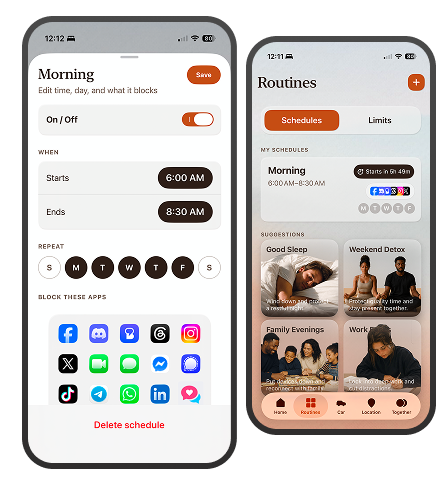
Put a gap between you and the app. The pull is strongest when the app is one tap away. Move it off your home screen, or block it during the hours you want your focus back.
Give your attention slower things to practice on. Focus responds to what you rehearse. If most of what you rehearse is fifteen-second clips, longer reading feels foreign. It comes back when you give it reps.
If the reach for the app is automatic, willpower in the moment tends to lose. enough. lets you block the specific apps that pull you in during set times or places, so the feed isn't there to open when your hand goes looking for it. You decide on a clear afternoon, and the decision holds at 11pm.
Your attention can get more practice going long. Most days it does not get asked to. Ask it more often, and it answers.